


.png)
By Kaitlyn Puskarich
I’m going to start this blog post with an anecdote. Stay with me, it all circles back.
I know we are deep into the mid-winter blues, and springtime gardens may be far away on the horizon; however, companion planting has really been on my mind lately. If you haven’t heard the term, it is used in gardening to grow more plentiful plants. Planting a companion plant nearby allows both plants to benefit from each other's nutrients. This mutual benefit improves both plants holistically: the health, growth, and pest control of each plant is elevated. For instance, if you plant beans next to strawberries, the beans provide shade for the strawberries and the beans like the nitrogen added to the soil by the strawberries; the strawberries, meanwhile, repel pests for the beans. By planting them together, both plants will produce better quantity and quality of crops. But even “aesthetic” plants can be beneficial to crop-bearing plants. Marigolds for instance aren’t something we generally eat, but we plant them because they are pretty or smell good. However, marigolds offer just as much benefit to our strawberries and beans.
.png)
Let's be honest, our strawberries are going to yield strawberries no matter what; it is what the plant was intended to do. But by paying attention to the whole picture, we can find a companion plant that is going to boost and support our strawberries, and the companion plant mutually benefits.
So what’s the point? As a visual art teacher of nearly fifteen years (yay!!!) I can attest to just how many people view art as extra or unnecessary, purely aesthetic. Far too many people believe that art is a nice break, and its only benefit is as a fluffy class that allows your brain to rest from the real work, when actually, science has proven time and time again how much Arts Education is like the companion plant of all education. Art is part of the real work and just as necessary as math and science to create the best success for our students to enter the world as young adults (Magsamen and Ross, 2025). A question we get here at SCA a lot, is why two art credits? And the answer is because we aren’t just a college prep school, we are growing whole students for the world, to use their gifts and talents and set the world ablaze.
.png)
Students who are allowed to grow and be successful in art*, understand and are more successful in science and math classes (Brouillette and Graham, 2016). Students who participate in arts education are more likely to graduate with honors (Ingram and Meath, 2007). They are more likely to increase their pattern recognition (Magsamen and Ross, 2025), observational skills (Dalia, Milam, and Rieder, 2020; Pellico, Friedlaender, and Fennie, 2009; Bardes, Gillers, and Herman, 2002), and believe it or not, their confidence in their own ability to solve problems (Magsamen and Ross, 2025). All of these skills are absolutely essential in the working world, no matter what career path our students choose.
Here are some stats and quotes that may or may not sound familiar:
“Young people who participate regularly in the arts are 3x more likely to be recognized for their academic achievement, score higher on SATs and 2x more likely to go on to earn a Bachelor's Degree” (Heath, 1998).
What about:
“In a world full of trained professionals and highly educated workers, creativity is one of the top skills that sets someone apart from the pack” (Searchassociates.com).
We’ve been hearing some version of this since the late 1990s-Early 2000s. Save the arts! When I was in college we had an entire class on how to advocate for an art program. We learned how to be frugal with supplies to spend as little money as possible just so kids could have access to arts in schools who were threatening or already removing their program funding all together.
And we succeeded! Most schools have brought back their programs, and arts education is thriving! Hooray!
There is this long-running concept in education that we are educating our students for jobs that aren’t even created yet. This was also huge in the 90s and 2000s when the internet was advancing at a sprint. But it still rings true today. We are creating students for a job force that we don’t really know exactly what it will look like, or what it will be. But one thing I can guarantee is that the skills they are learning in art classes will be applicable. These are human skills, they aren’t a fad or a passing trend, and humanity is something AI will never replace. Arts education isn’t a break from real learning, it is real learning. Arts education is often the most concrete application of concepts they are learning in all other content areas which increases retention of academic content (Hardiman, Mariale, Rinne and Yarmolinskaya, 2014). We are math, we are science, we are language, and we are most definitely history! And it’s time we honor that integration by being intentional about how we frame arts education in our schools, and how we as adults regard arts education so our students can also recognize the value in it.
*Art classes include all art forms, visual, performing and musical arts!*
Sources:
Bardes, C.L., Gillers, D., and Herman, A. E. (2002). “Learning to look: Developing clinical observational skills at an art museum.” Medical Education, 35(12) 1157-1161
Brouillette, L. and Graham, N. J. (2016). “Using arts integration to make science learning memorable in the upper elementary grades: A quasi-experimental study. Journal for Learning through Arts, 12(1).
Dalia, Y., Milam, E. C., and Rieder, E. A. (2020). “Art in Medical Education: A Review.” Journal of Graduate Medical Education.
Ingram, D. and Meath, M.(2007). “Arts for Academic Achievement: A compilation of evaluation findings from 2004-2006.” Center for Applied Research and Educational Improvement.
Fueling A Creative and Collaborative Classroom. April, 2019. https://www.searchassociates.com/news-events/fueling-a-creative-and-collaborate-classroom/
Hardiman, Mariale, L. Rinne, and J. Yarmolinskaya. “The Effects of Arts Integration on Long-Term Retention of Academic Content.” International Mind, Brain, and Education Society 8, no. 3 (2014): 144-148
Heath, S. (1998). “Living the Arts through Language + Learning: A report on Community-Based Youth Organizations.” Americans for the Arts Monograph. Nov. 1998
Magsamen, S. and Ross, I. (2025). Your Brain on Art: How the Arts Transform Us. Random House. New York, NY.
Pellico, L., Friedlaaender, L., and Fennie, K.P. (2009). Looking is not seeing: Using art to improve observational skills. Journal of Nursing Education, 48(11), 648-653.
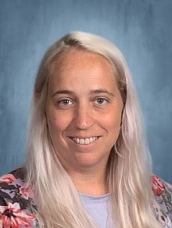
Kaitlyn Puskarich teaches Visual Art at St. Catherine of Siena Academy. She holds a Bachelor’s in Art Education from the University of Central Missouri and a Master’s in Art Therapy and Counseling from St. Mary-of-the-Woods College. This is her 14th year teaching high school art and her 3rd year at SCA.


