.png)
By Catherine Hug
When I was sixteen and told my parents that I wanted to go to art school instead of a traditional university, they looked at me like I had just grown another head. To be fair, both of my parents are physicians. They were only familiar with a path that guaranteed a job you could rely on for the rest of your life. For their oldest, high achieving daughter to declare a completely different path than the one they had maybe envisioned—it took time to adjust to a new future.
By the time I was applying to colleges, my parents were behind me and my artistic pursuits 110%. They came on tours of art schools, and realized that a place like that would be a place I would thrive. It’s something that I appreciated, as I watched some of my friends and classmates struggle to make their own path in life, away from the future once envisioned for them. I was accepted not only into some of the best art schools across the country, but some of the best traditional universities. I had worked hard to create options for myself. I had choices, and I chose to go to the Savannah College of Art and Design, which is the number one art school in the United States. I wanted to be a filmmaker, so I began to pursue my career.
In high school, I took every art class offered, was very involved in the Drama Department, and found myself struggling to play piano, but loving it anyway. I was just doing what I enjoyed. I didn’t realize that I was developing critical skills that would carry me through college, grad school, and into my career.
During my first year of college, I was constantly public speaking. I had to present my work and defend my process to my professors and fellow students. But it wasn’t a challenge or something I dreaded—I had spent countless time in Drama practicing speaking in front of others; improving my diction and projecting my voice. When I had finished my defense to my professors, then it was time for critique—a very humbling experience where your work is taken apart before finding better solutions to improve your piece. Critique was never an easy day, but I knew how to accept feedback from my art classes in high school.
Just these few skills already made me leaps and bounds ahead of some of my peers—even if my work was not where I wanted it to be. There were always better artists, better writers, and better filmmakers than me, but it was my abilities to effectively communicate, accept feedback and use it well, and have the flexibility to find creative solutions to difficult problems that made me stand out.
It’s not just within art that these skills are needed, but it is within art that these skills are developed. It’s been shown throughout three decades of research from a number of notable institutions that studying the arts makes better doctors. At the University of California, Irvine, College of Medicine, they studied that art curriculum incorporated into medical school helped improve empathy and positive attitudes towards patients (Shapiro). Resident Physicians that were also a part of similar studies saw an improvement in pattern recognition and visual observational skills, critical for making a diagnosis (Journal of Graduate Medical Education).
Creativity has become one of the most sought after traits within business and finance, because investors are looking for individuals to solve problems with out-of-the-box thinking for pennies on the dollar (Homayoun, Henriksen). It’s also shown that when public servants have had an art education, they tend to promote more positive social welfare for society and boost morale (Song, Kim).
The world seems to change on a dime every other day, however the skills that we are teaching are needed, no matter the state of the world.
As I transitioned from college student to grad student, COVID-19 broke out and the world changed so drastically it seems that we are still recovering five years later. The way we viewed the workplace, education, and healthcare turned on its head. Many industries suffered and continue to suffer. The film industry, which was once a booming business that thrived during the early days of streaming, now limps on after COVID, two strikes, and the devastating Palisades fires this past January.
The industry I once trained for during college and grad school struggles to exist. I had to pivot my professional life. Thankfully, the skills and knowledge were already there, I just had to choose a field to apply them to.
For a short while I was a journalist for magazine publications until an opportunity came up to teach and be an assistant director for a graduate program at a university. I entered academia and haven’t looked back.
The world continues to turn and maybe one day I will return to the industry I love and trained for. But until then, I’m happy passing on and teaching infallible skills that will help students no matter the field they choose.
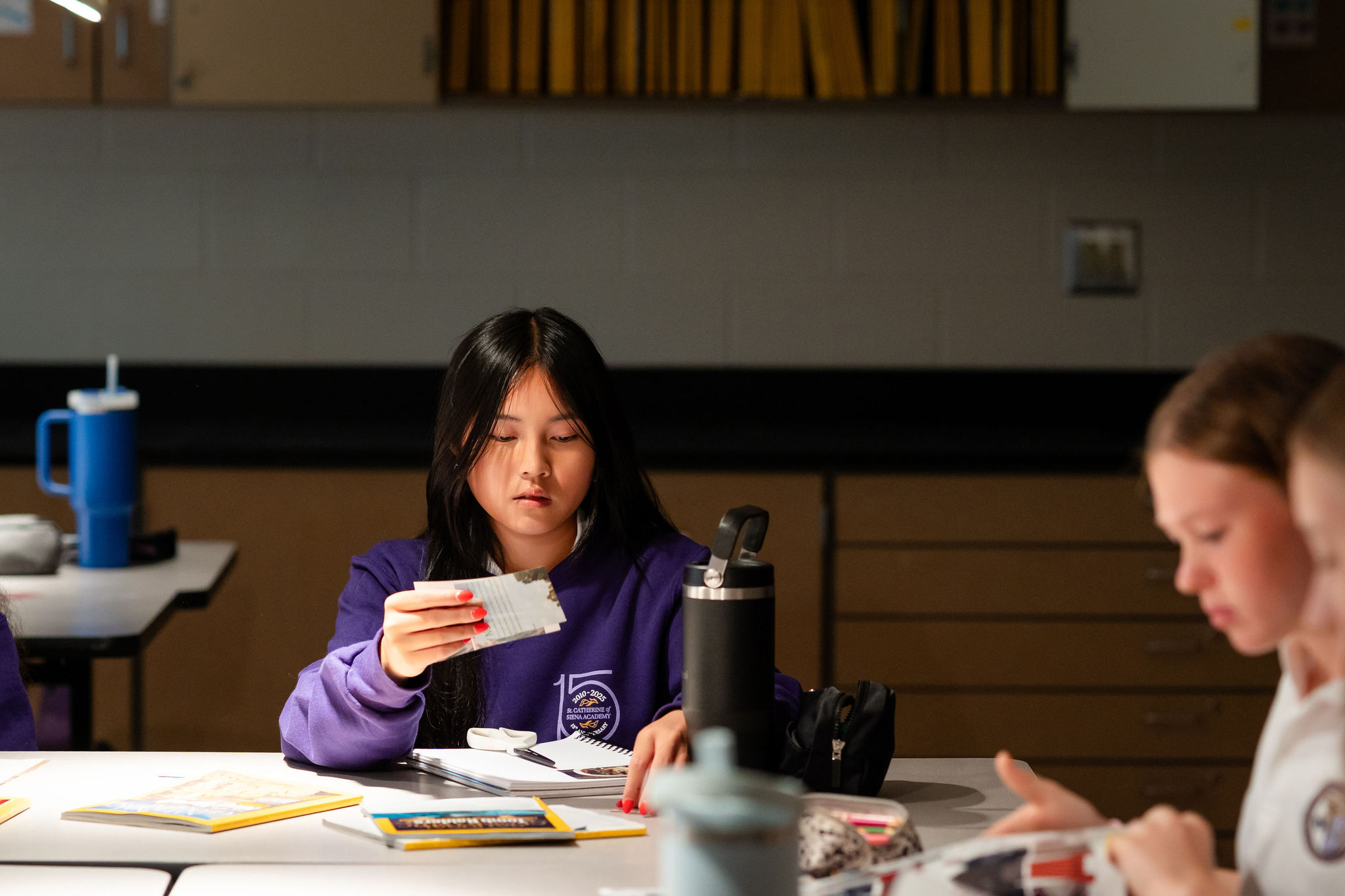
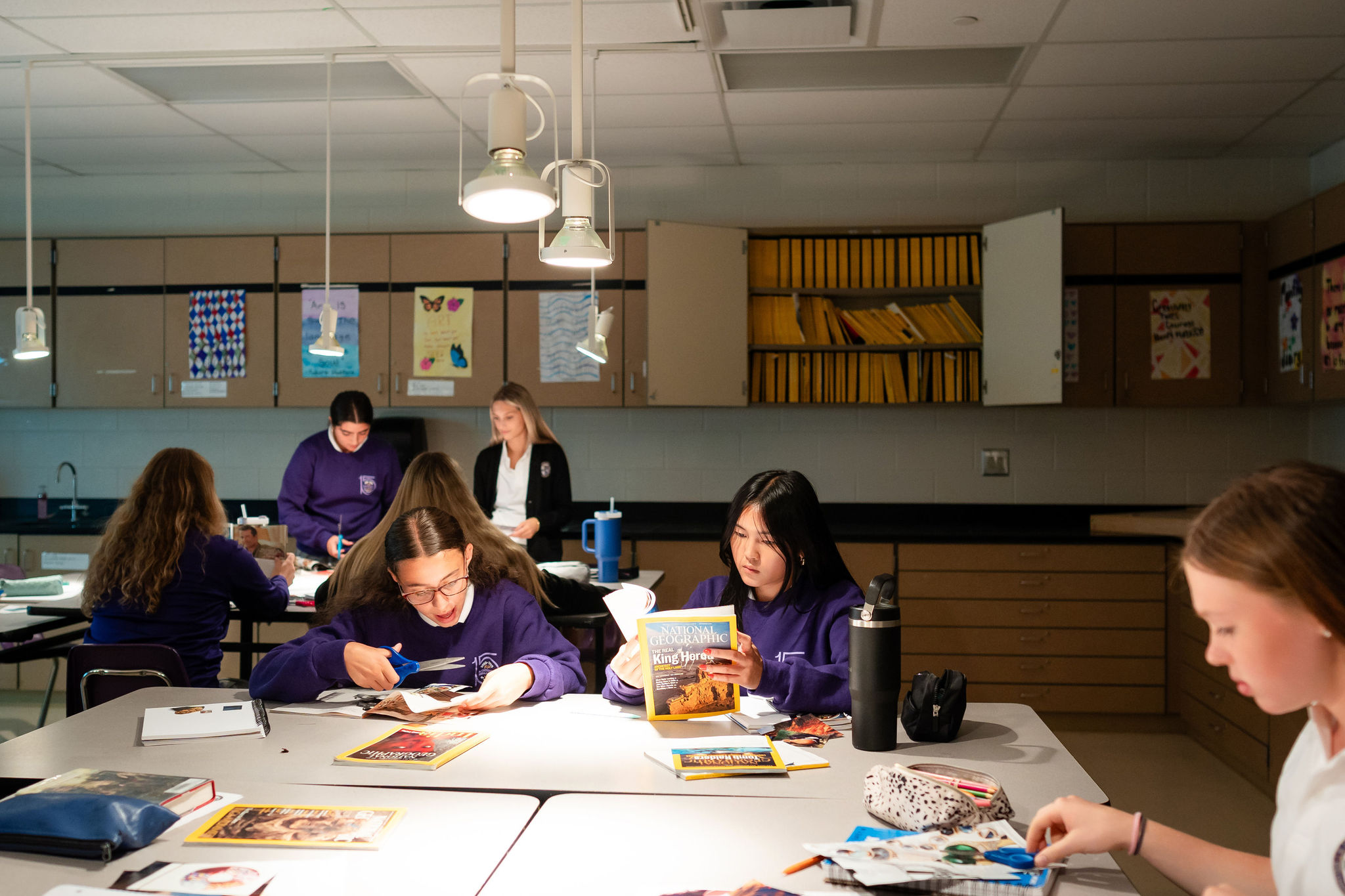
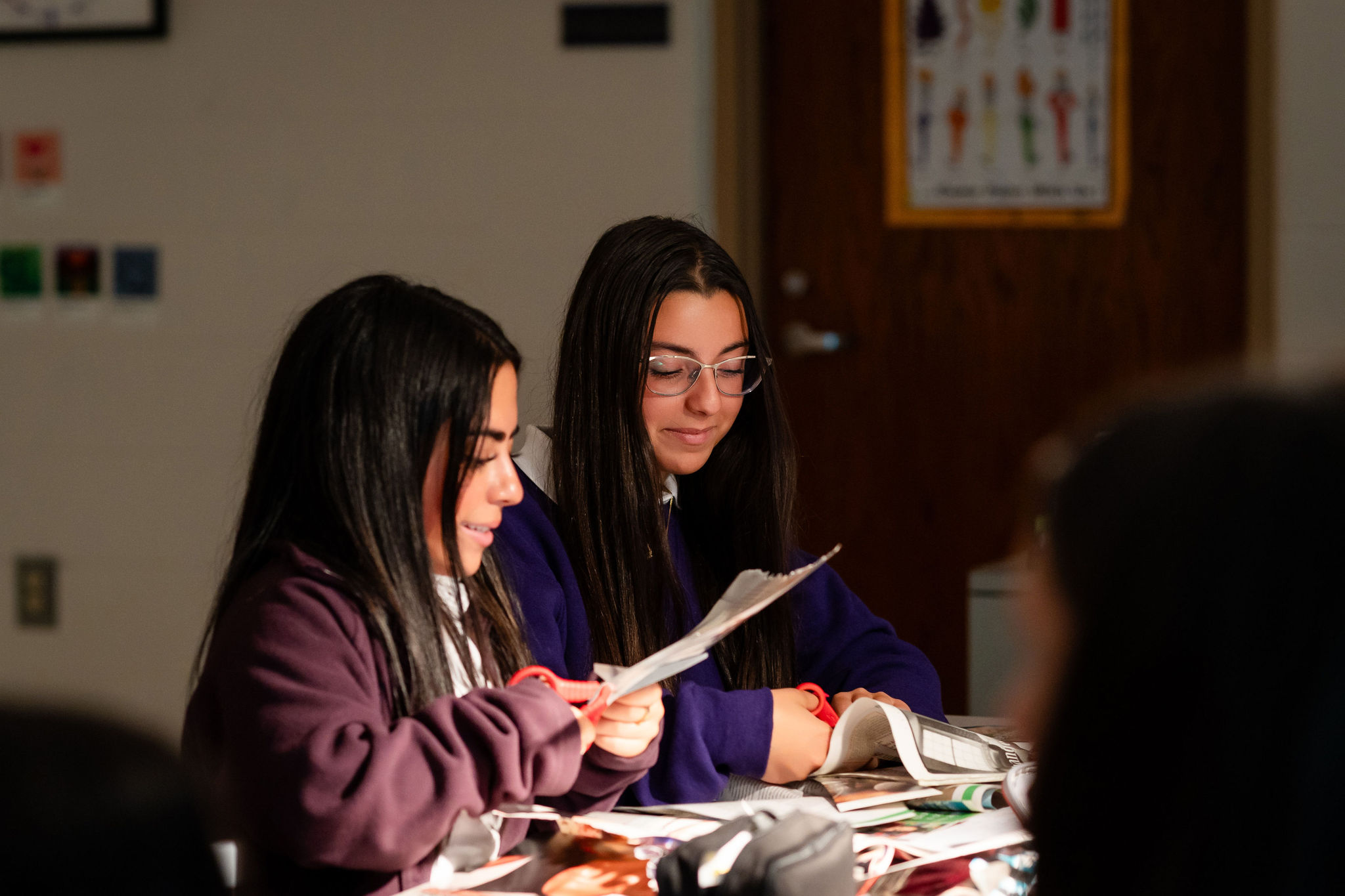
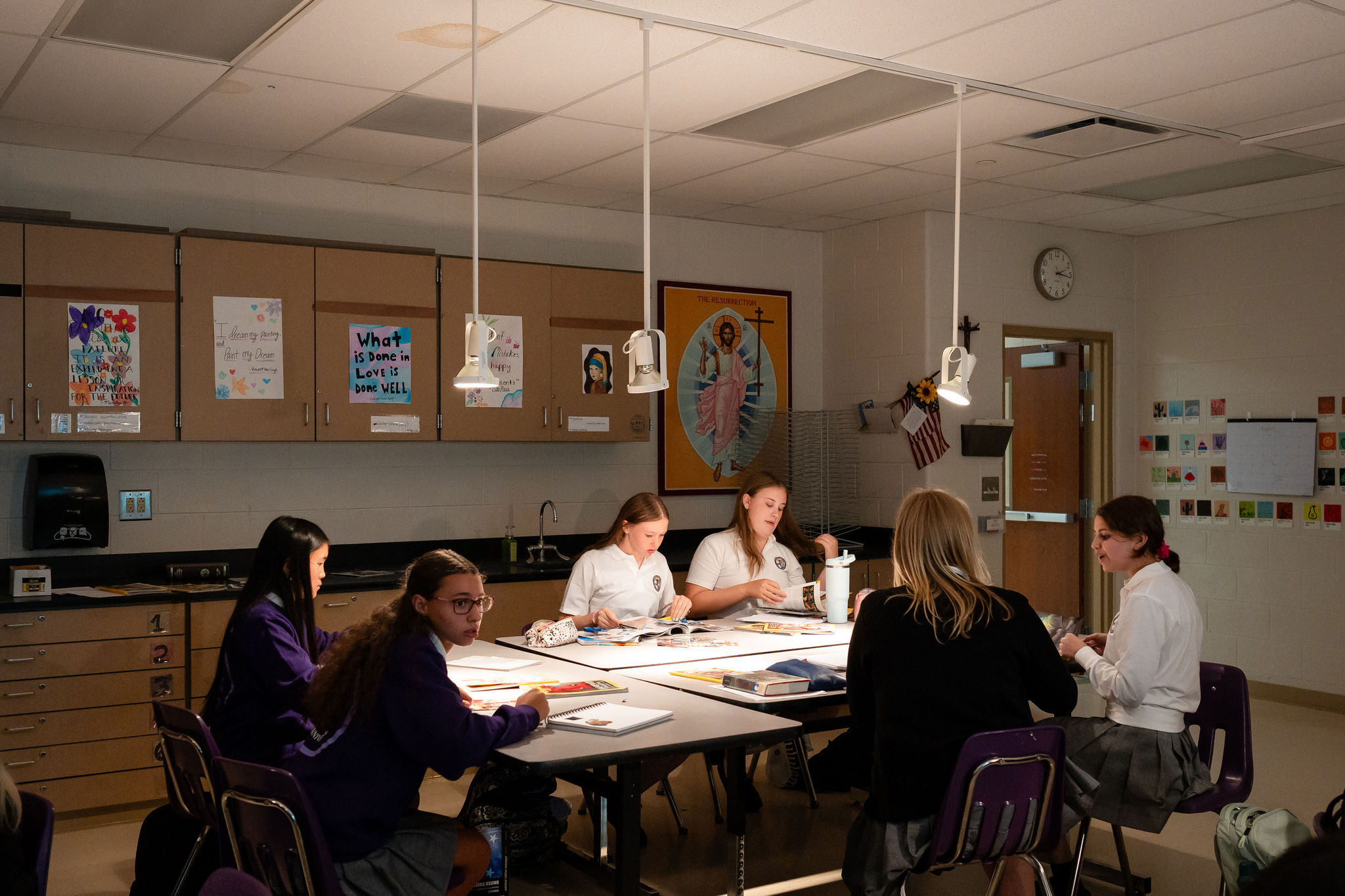
As an art educator, there is the assumption that I’m here to turn children into artists. And while there are a handful of students who will follow similar paths to my own, the majority of my students are in my classroom to gain skills that aid in observation, empathy, cultural exploration, public speaking, reflection, and many more that have been proven to be critical in the fields of medicine, finance, business, technology, and public service.
So yes, your student has to take two credits of art. And yes, I understand that not all of them will be creatives. But within any arts classroom your student encounters cross-curricular lessons and life skills that are applicable not only today, but decades down the road. Now that’s a good education.
Works Cited:

Catherine Hug teaches Visual Art at St. Catherine of Siena Academy. She holds a Bachelor of Fine Arts from Savannah College of Art and Design and a Master of Fine Arts in Screenwriting from Pepperdine University. This is her 3rd year at SCA.
.png)
.png)